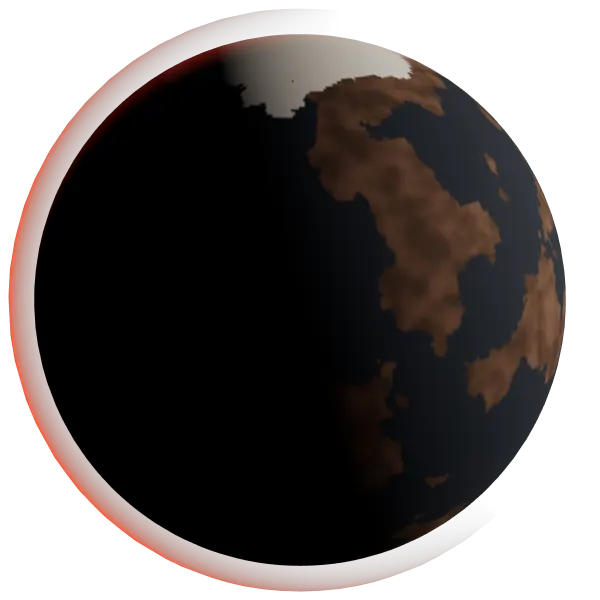
Five worlds, one method
Each destination is a numbered campaign with its own product name and domain. The number never changes, even if the product is renamed. Campaign 01 is live; the others are in development or planned.
- GC-01Live
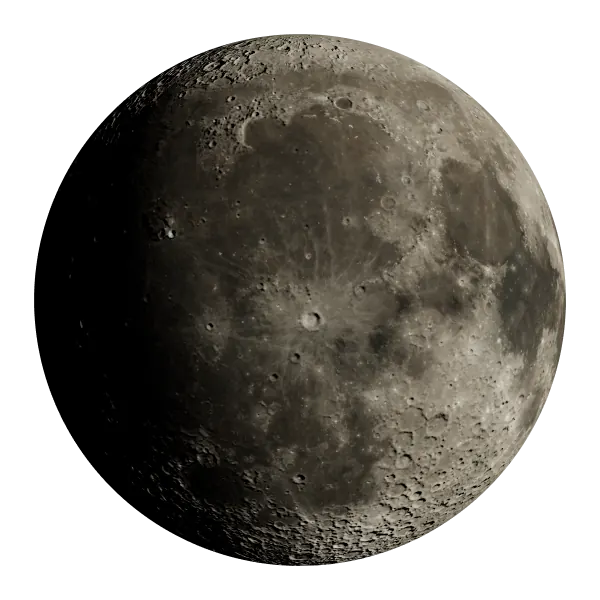
Luna
An outpost on the rim of Shackleton crater.
Sunlight grazes the south pole at under two degrees, so ridges stay lit for months while crater floors never see the Sun and keep their ice. Plan the base on 5-metre NASA terrain, against the real sky.
- Distance
- 384,400 km
- Transit
- ≈ 3 days
- Signal delay
- 1.3 s
- GC-02In development
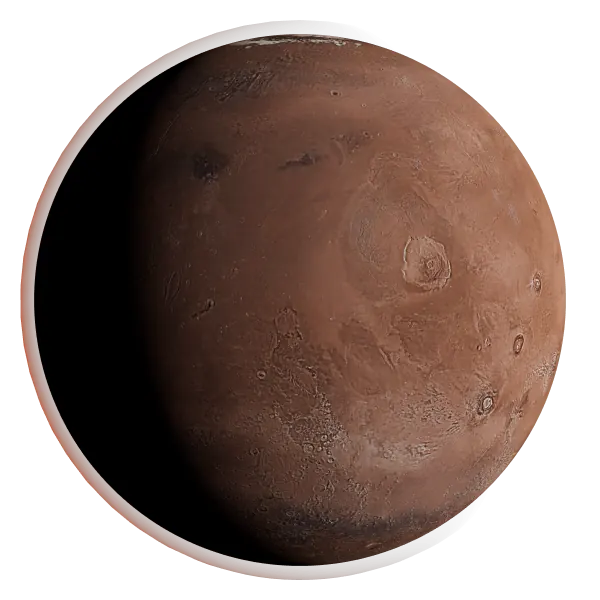
Mars
A surface base that has to wait for the planets.
Launch windows open about every 26 months and a minimum-energy transfer takes about 259 days. Every spare part, every litre of fuel and every crew rotation is planned around that rhythm.
- Distance
- 55–401 M km
- Transit
- ≈ 259 days
- Signal delay
- 3–22 min
- GC-03Planned
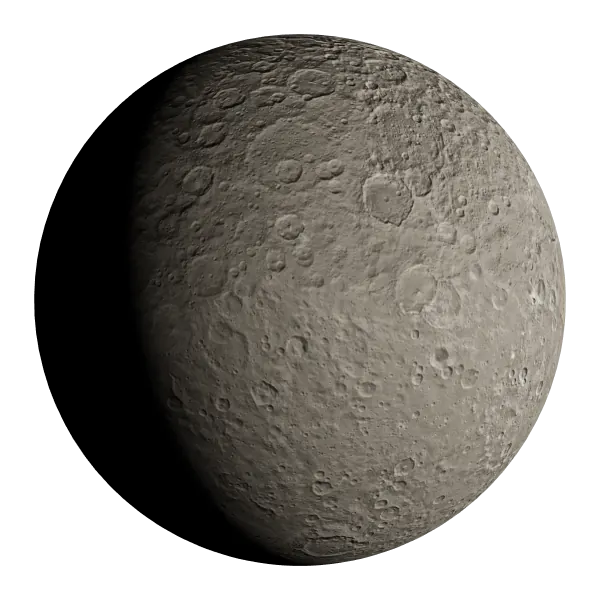
Ceres
A water depot in the asteroid belt.
The largest object in the belt holds water ice and bright salt deposits, and its weak gravity makes launches cheap. That combination could make it a refuelling stop for the outer system.
- From the Sun
- 2.77 AU
- Transit
- ≈ 15 months
- Signal delay
- 13–33 min
- GC-04Planned
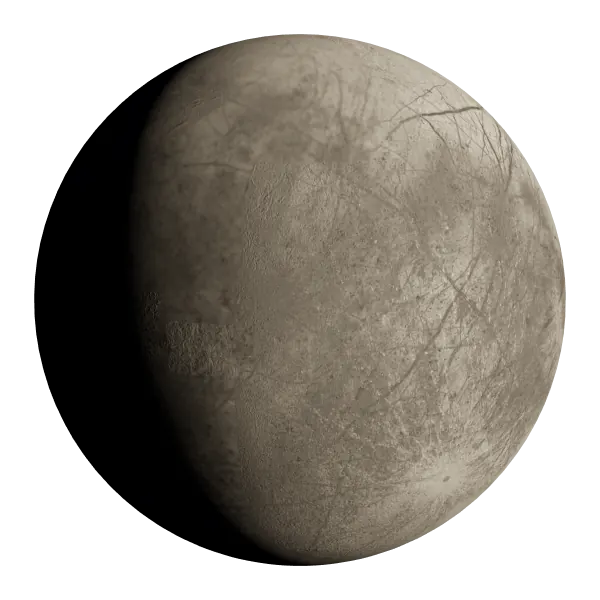
Europa
A research station on an ocean world.
A global ocean lies under an ice shell estimated at 15–30 km thick. Jupiter's radiation belts strike the surface hard enough that the station has to live under the ice or behind it.
- From the Sun
- 5.2 AU
- Transit
- ≈ 2.7 years
- Signal delay
- 33–54 min
- GC-05Concept
Proxima b
The first crossing between stars.
A planet of at least 1.07 Earth masses that orbits its red dwarf every 11.2 days, inside the habitable zone. Even a light-sail probe at a fifth of light speed would take about 20 years to get there.
- Distance
- 4.24 ly
- Transit at 0.2 c
- ≈ 20 years
- Signal delay
- 4.24 years